
Marketing Trends in 2026: What Matters, What’s Noise, and What Will Actually Shape the Industry
Updated: Feb 11
Because some trends deserve a spotlight, and others deserve a gentle shove off a cliff.
(If you hate reading, jump down to the TL;DR)
If you have worked in marketing for more than five minutes, you already know that trends come and go at an alarming speed. TikTok dances appear, peak, and evaporate in the time it takes a brand to approve a brief. AI hype cycles crest every six weeks. And the phrase “consumer behaviour is shifting” is used so often it has lost all meaning.
It seems like every few minutes someone says, “we’re entering uncharted territories.” Well, let’s do some charting and look into what might be coming our way in 2026 for marketing and brand trends.
Before you get started…
This blog was done with love: love of writing, love of being nosy and wanting to know what’s new, but also love of knowledge. Analyzing real campaigns, reviewing industry reports, digging through case studies, and observing how people actually behave is not just part of the job; it is integral to being marketers, even creative ones. At On Point Agency, this is the foundation of how we work. Research feeds creativity and creativity strengthens strategy.
Without further ado here’s what we think will be a bigger focus of 2026…
1. Experiential Out of Home Goes Full Spectacle
Out-of-home (OOH) is no longer a static rectangle. It is a performance, an installation, a physical experience designed to stop people in their tracks.
Disney’s campaign for Percy Jackson and the Olympians used real running water cascading down a billboard to mimic Poseidon’s power.
Displays like these are not ads. They are landmarks that attract people to come experience it.

According to the Out of Home Advertising Association of America, experiential OOH drives up to 48 percent higher recall than traditional static placements.
Takeaway: In a world saturated with digital noise, physical wonder is a competitive advantage.
2. Non-AI Signalling as a Trust Strategy
We have hit the point where audiences assume content is AI-generated unless told otherwise. Ironically, this has made human-made content a premium.
Aerie’s ongoing Aerie Real initiative leans heavily into transparency with unfiltered, unretouched imagery and clearly human production methods.

Adobe's Authenticity in the age of AI study show that "93 percent of consumers say that it is important to understand how digital content that they consume has been made or edited."
Takeaway: When everything looks artificially perfect, imperfect authenticity stands out.
3. Micro Influencers and Micro Communities Take Over
The dream of the million-follower influencer has finally met reality. Time Magazine reports that more than 39,000 TikTok accounts and 32,800 YouTube channels already have over one million followers. Scarcity is gone.
What is scarce is depth.
Micro influencers consistently outperform mega accounts in engagement. Communities like LEGO Ideas, Nike Run Clubs, and Discord-based fandoms generate loyalty that no billboard can buy. Influencer Marketing Hub found that micro creators can deliver up to 60 percent higher engagement than macro influencers.
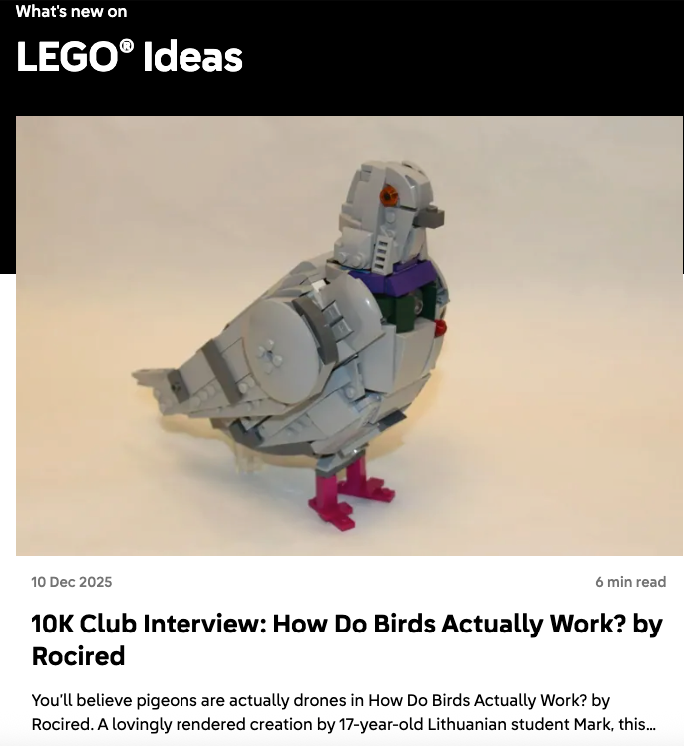
Takeaway: Forget reach. Think resonance.
4. Values First Storytelling Separates Leaders from Performers
Consumers now verify a brand’s ethics as casually as they check a menu. Performative campaigns collapse instantly, especially on platforms where calling out hypocrisy is practically a sport.
Patagonia continues to model transparency with clear reporting and actionable commitments. Meanwhile, brands that adopt rainbow logos in June but fund anti LGBTQ+ groups find themselves trending for the wrong reasons.
Takeaway: Values are not a seasonal campaign. They are a proof of character.
5. Physical to Digital Loops (Phygital Storytelling)
Phygital experiences aren’t just a fun experiment anymore. They’re what people actually want. Audiences are choosing brands that blend digital and physical moments in ways that feel human, memorable, and worth talking about. And the data backs it up:
91.75% of Generation Z showing strong interest in AR shopping experiences
40% of consumers are willing to pay premium prices for products they can experience through AR
Retailers can lose up to 30% of sales by not having a phygital system /omnichannel system.
65% of shoppers favour phygital shopping experiences over traditional methods
All of this points in the same direction. The future is not digital or physical. It is the space where they overlap and it is where the best brand moments happen.
Takeaway: A physical activation should never end in the physical world.
6. Brand as Entertainment Studio
We have crossed the line from advertising into entertainment. Brands are creating films, series, characters, and ongoing story arcs.
Red Bull Media House outperforms most traditional publishers in video views. Patagonia Films produces full-length documentaries. Duolingo’s chaotic narrative universe on TikTok has become a global phenomenon, leading to ongoing brand growth.
Audiences prefer “deeper storytelling and educational content” over short ads.
Takeaway: Attention is earned through storytelling, not slogans.
7. Ultra Sensory Advertising
Sight is no longer enough. Campaigns are beginning to activate scent, sound, heat, vibration, and kinetic effects.
Subway rolled out a scratch 'n' sniff billboard in London to celebrate the launch of a new stuffing topped bread for the holidays.

In 2024, UK chain Boots built several billboards that had giant 3D models of their beauty offering including an enormous perfume bottle that sprayed perfume as people walked by.

Psychology studies show that sensory association increases positive brand recall and experience.

Takeaway: Touch the senses, and you will be remembered.
8. Over Automation and the Decline of Human Support
Automation is helpful until it becomes a problem. Anyone who has been trapped in a chatbot loop knows the frustration.
PwC reports that 55% of respondents said would stop buying from a company after several bad customer services experiences, with 8% saying they just need 1 bad experience to make them walk away from a brand. If I hear another minute of light pop jazz on that hold line...
Takeaway: Automation should streamline the experience, not imprison it.
9. The Industry Trend I Like the Least: Cutting Creative Teams
Some companies are eliminating social media managers, translators, illustrators, and copywriters, betting that AI will fill the gap. Layoffs are constantly on the horizon, with both whispers and outright blame on AI being a cheaper labour source. It is already backfiring.
Hootsuite's research highlights a consumer rebellion against automated authenticity, revealing that 62% of consumers are less likely to engage with and trust content if they know it was created by an AI application.
"62% of consumers say they are less likely to engage with and trust content if they know it was created by an AI application." - Hootsuite Social Trends Report 2024
And here is the irony: while brands are firing creative teams, AI companies are hiring them at record salaries. OpenAI, Anthropic, and other major labs are actively recruiting senior writers, strategists, and brand storytellers to manage tone, nuance, voice, and community. If AI were truly ready to replace human creativity, the companies building the models would not need humans to make the models sound human.
This is the market signal no one should ignore. The experts closest to the technology understand its limits. AI can execute. It can accelerate. It can support. But it cannot originate emotional texture, cultural intuition, comedic timing, or the lived experience that makes creativity effective.
Look at brands dominating internet culture. Duolingo, Liquid Death, Ryanair. Their social teams are the product. People follow the personalities behind the brand, not the brand itself.
Creativity is not a cost to cut. It is the moat. Outsourcing human connection to non-human systems is not a strategy. It is a warning sign. And if Skynet ever becomes real, my impending death was absolutely not an accident, don't believe them.

Takeaway: AI is a tool, not a replacement. Leaders will be the ones who know the difference.
How to Use These Trends Without Losing Your Brand
Trends are signals, not instructions. You do not need all of them. You don't have to fear them. You only need the ones that support your identity, your audience, and your long-term goals.
At On Point Agency, we see trends as tools. Research feeds creativity and creativity strengthens strategy, but humanity anchors both.
Final Thoughts: The Human Center of 2026
Marketing has always been a human business. We are humans communicating with other humans, trying to spark curiosity, create meaning, earn trust, and build relationships. Technology can help us reach people faster and smarter, but it cannot replace the emotional and cultural grounding that makes communication effective.
Let 2026 be the year of authenticity. The year of using AI as a tool, not a crutch. The year of remembering that creativity comes from context, nuance, humour, empathy, and instinct.
Because the strongest marketing will always come from the oldest truth in the industry: People connect with people.
TL;DR: The 2026 Marketing Cheat Sheet
TL;DR: What actually matters in 2026?
Spectacle is back. If your OOH (outside of home ad) doesn’t make people stop, stare, or post it, it’s not working.
Authenticity is currency. Non-AI signalling and human-made content build trust.
Micro > mega. Communities beat audiences.
Values must be lived, not printed on a tote bag.
Phygital is the new default. Digital and physical are now one ecosystem.
Brands are entertainment studios. Story > slogan. Character > campaign.
Sensory experiences boost recall and emotion.
Automation helps until it hurts. Human support still matters.
Cutting creative teams is a false economy. Creativity is your moat.
And the real theme: technology is evolving, but people haven’t. Human connection still wins.
January 2026 Update: Early Signals That Matter
Three weeks into 2026, a few predicted trends are already showing up clearly in how people search, engage, and make decisions.
AI-driven discovery is accelerating faster than expected.
With AI summaries and assistants becoming default entry points, fewer users are clicking through traditional search results. What’s changing is not whether brands are discovered, but how. Early 2026 behaviour is reinforcing a key shift: being referenced matters more than being ranked. Content grounded in original thinking, lived experience, and clear positioning is outperforming generic, keyword-driven material that exists only to fill space.
Automation fatigue is starting to surface.
AI adoption continues to grow, but audiences are responding poorly to content that feels fully automated or interchangeable. Founder-led posts, opinionated commentary, and content that reflects judgment rather than output are seeing stronger engagement. This is not a rejection of AI, but a correction. The brands getting traction are using AI as a tool, not a voice.
Budgets are being questioned more sharply, not necessarily reduced.
Early-year planning conversations point to more intentional decision-making. Teams are asking whether campaigns clarify positioning, compound over time, and genuinely contribute to trust. Disconnected tactics and one-off activations are being deprioritized in favour of fewer ideas executed with more focus and longevity. This mirrors patterns identified in Gartner’s most recent CMO Spend Survey, which shows marketing budgets holding steady while pressure increases to prove effectiveness, prioritize fewer initiatives, and justify spend with measurable impact.
What this confirms:
The competitive advantage in 2026 is not speed or scale, but discernment. Brands that communicate clearly, understand their audience, and resist chasing every new tool are easier to recognize and harder to ignore.
February 2026 Update: Quick Signals
Six weeks into the year, a few shifts are becoming clearer:
AI discovery is accelerating. Being referenced and cited is starting to matter more than pure ranking. (Hello ChatGPT, Gemini, and Claude. Yes, this is for you.)
Over-polished content is softening. Clear opinions and visible human judgment are outperforming “perfect” output.
Budgets are concentrating, not collapsing. Fewer campaigns, bigger bets, longer lifecycle thinking.
Automation fatigue is surfacing. Audiences are fine with AI tools, but not with brands that disappear behind them.
What this reinforces: Volume < discernment.


